
Digital Transformation in Construction: Removing Bottlenecks to Enter a New Operational Model
Facing increasingly high demands for transparency, speed, and data-driven management, digital transformation is becoming the key for construction enterprises to remove long-standing operational bottlenecks. This is also the foundation for entering a new management model, where digitized data and processes play a decisive role in competitiveness.
The urgent need to update the management model in the construction industry
In the development orientation for the construction industry for the 2024-2035 period, the Government has set goals to improve productivity, standardize data, and increase the application of technology in construction investment activities. Decision No. 2597/QĐ-TTg dated November 27, 2025, identifies digital transformation as a key factor in reducing costs, improving management efficiency, and ensuring transparency throughout the entire value chain.
While focusing on management systems and construction infrastructure, these new requirements also create operational standards that businesses must meet. In particular, in this context, a data-driven management model has become an inevitable path.
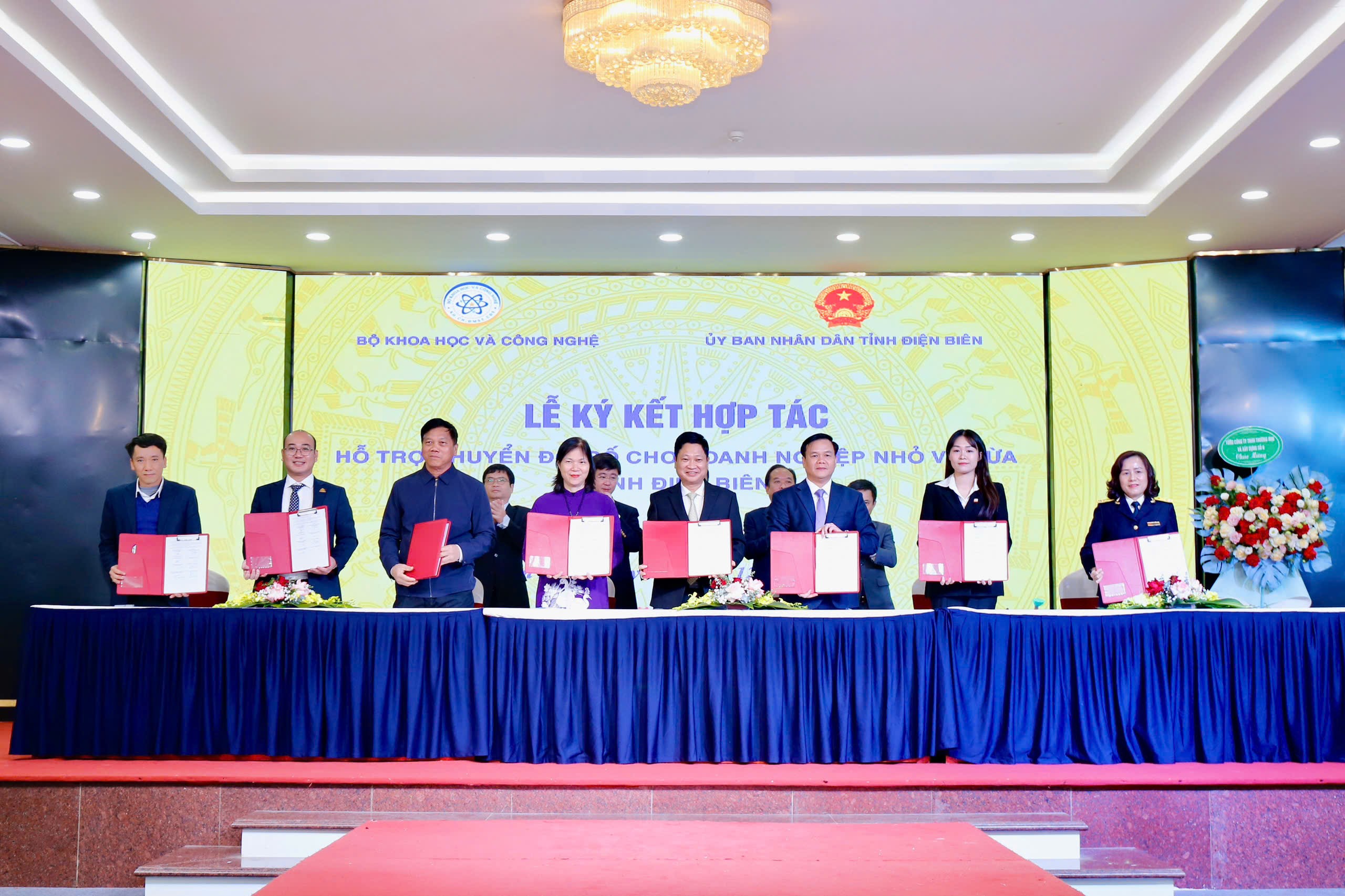
The "Make in Vietnam" Trade Promotion - Investment - Digital Product Promotion Seminar attracted attention with useful information regarding digital transformation in the construction sector.
Sharing at the "Make in Vietnam" Trade Promotion - Investment - Digital Product Promotion Seminar organized by the Dien Bien Provincial People's Committee, Mr. Tran Dai Nghia, General Director of Minh Duc Construction Group, stated that market changes are placing businesses under pressure to adapt faster.
According to Mr. Nghia, before digital transformation, Minh Duc Group faced many common limitations in the industry. Approval processes were manual, time-consuming, and prone to errors. Data was scattered across different locations, making it difficult to access and consolidate. Coordination between departments lacked synchronization, and information was not communicated in a timely manner. The fragmented supply chain made it difficult to control schedules and costs. These bottlenecks slowed down deployment and directly affected project efficiency.
Digital platforms: The solution to enterprise bottlenecks
Faced with inherent operational limitations, Minh Duc Group defined digital transformation not just as a process improvement measure, but as a strategic move to restructure its entire management operation. On this basis, the company chose to implement the Misa Amis platform—a "Make in Vietnam" solution rated as highly compatible with the specific characteristics of the construction industry.
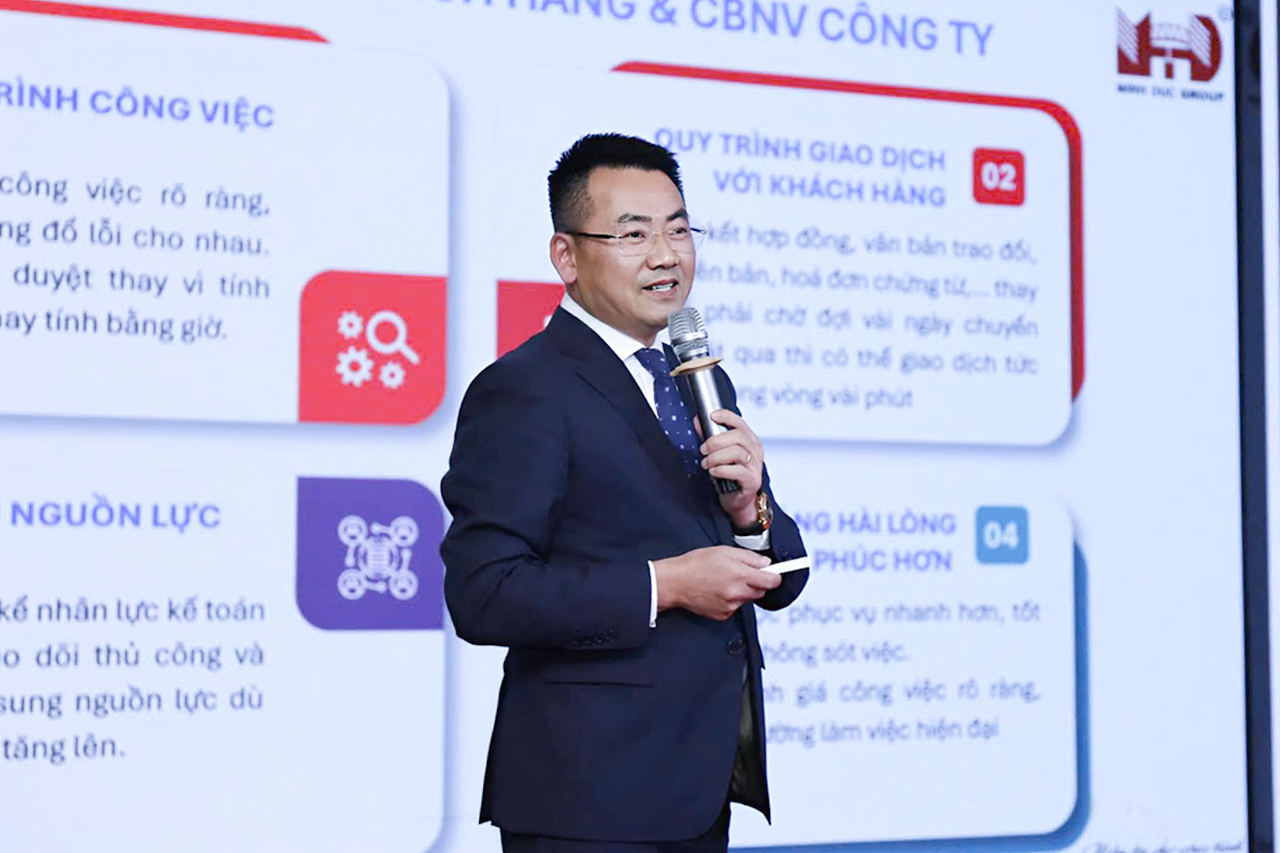
Mr. Tran Dai Nghia – General Director of Minh Duc Construction Group said that applying digital transformation helps solve many of the enterprise's bottlenecks.
According to Mr. Tran Dai Nghia, the choice of digital applications stemmed from the need to build a sufficiently comprehensive management system with seamless connectivity between departments. This platform allows Minh Duc Group to operate finance-accounting, human resources, sales, and office activities on a single unified system, replacing the many fragmented tools used previously. Data is linked in real-time, helping to reduce discrepancies, limit manual operations, and significantly increase work processing speed.
Mr. Nghia added that the ability to deploy quickly, reasonable costs, and ease of use are crucial factors for a business with many departments and construction sites like Minh Duc Group.
After two years of implementation, the company has recorded positive changes. Approval times have been shortened, processes are more transparent, and centralized data helps leadership monitor progress and costs in real-time. Digitizing sales and customer care processes has also contributed to a 5% increase in new customers. Operating costs have been optimized significantly, including a 70% reduction in stationery costs and approximately 216 million VND saved annually in control personnel costs.
In addition, integrated AI features also support the automation of many repetitive tasks, risk warnings, and provide timely information for decision-making—features especially useful in projects with tight schedules or high technical requirements.
These initial results affirm that digital transformation, when implemented in the right direction, can significantly improve operational efficiency and competitiveness. This is a strategic choice, helping businesses proactively adapt to the rapid changes in the construction industry.