
Geotechnical Engineering for High-Speed Railways: Controlling Subgrade Deformation and the Role of Reinforcement Solutions
High-speed railways impose stringent requirements on the bearing capacity, stiffness, and long-term deformation performance of railway subgrades. In this context, soft ground improvement, differential settlement control, and transition zone design are among the key geotechnical challenges, requiring close integration of site investigation, engineering analysis and design, reinforcement materials, and construction technologies.
Geotechnical Engineering – The Foundation for High-Speed Railway Stability
In high-speed railway infrastructure, the subgrade receives and transfers loads from the track structure to the underlying natural ground. The performance of this system depends not only on the bearing capacity of the foundation soil but also on its stiffness, uniformity, and stability throughout the operational life of the railway.
Beyond conventional bearing capacity assessments, high-speed railway subgrade design must simultaneously consider immediate deformation, soil consolidation, post-construction settlement, and changes in ground behavior under repeated train loading.
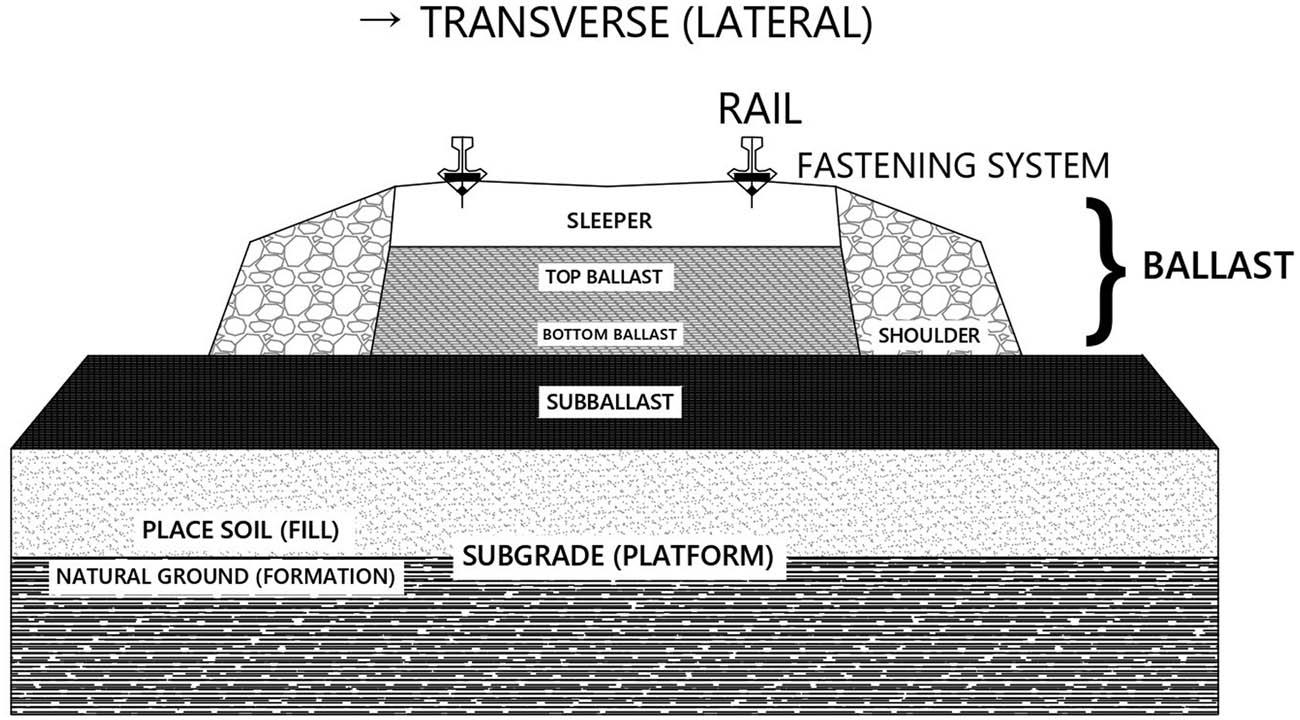
Railway subgrade structural layers and the role of the underlying ground in receiving and distributing loads from the track structure.
n particular, where railway alignments pass through areas with varying geological conditions, differences in deformation characteristics between adjacent sections may result in differential settlement and changes in longitudinal stiffness. Such irregularities can affect track geometry, increase maintenance requirements, and influence the overall performance of the railway system.
Geotechnical engineering therefore plays a fundamental role in assessing ground conditions, selecting appropriate ground improvement methods, controlling deformation, and ensuring continuity in subgrade performance along the railway alignment.
Four Key Geotechnical Challenges
1. Soft Ground Improvement and Long-Term Settlement Control
Soft soils typically exhibit low shear strength, high compressibility, and limited drainage capacity. Under loads from embankments and overlying structures, these soils may continue to deform over extended periods, even after construction has been completed.
For high-speed railways, the concern is not limited to total settlement but also includes residual settlement occurring after the railway enters operation. If deformation is not adequately predicted and controlled, changes in subgrade geometry may develop, requiring corrective measures during service.
The selection of ground improvement methods should be based on factors such as the thickness and characteristics of soft soil layers, drainage conditions, embankment height, design loads, construction schedule, and settlement control requirements.
Potential solutions include preloading combined with drainage, deep cement mixing columns, ground improvement piles, geosynthetic-reinforced pile-supported embankments, and in-situ soil replacement or improvement techniques.
Each solution operates through a different mechanism and has its own applicable conditions. For example, preloading combined with drainage aims to accelerate soil consolidation before the railway enters service, while pile-supported ground improvement systems can transfer part of the applied load to deeper, more competent soil strata.
The optimal solution must therefore be selected based on geotechnical analysis, evaluation of ground improvement effectiveness, and the deformation requirements of each railway section.
2. Differential Settlement Control at Transition Zones
One of the most sensitive areas along a high-speed railway alignment is the transition between earthworks and engineered structures, particularly at interfaces between embankments and bridge abutments, viaducts, or tunnel portals.
At these locations, structural stiffness and load-bearing conditions may change significantly over relatively short distances. Bridge foundations often exhibit different deformation characteristics from earth embankments, while underlying soft soils may continue consolidating after the railway becomes operational.
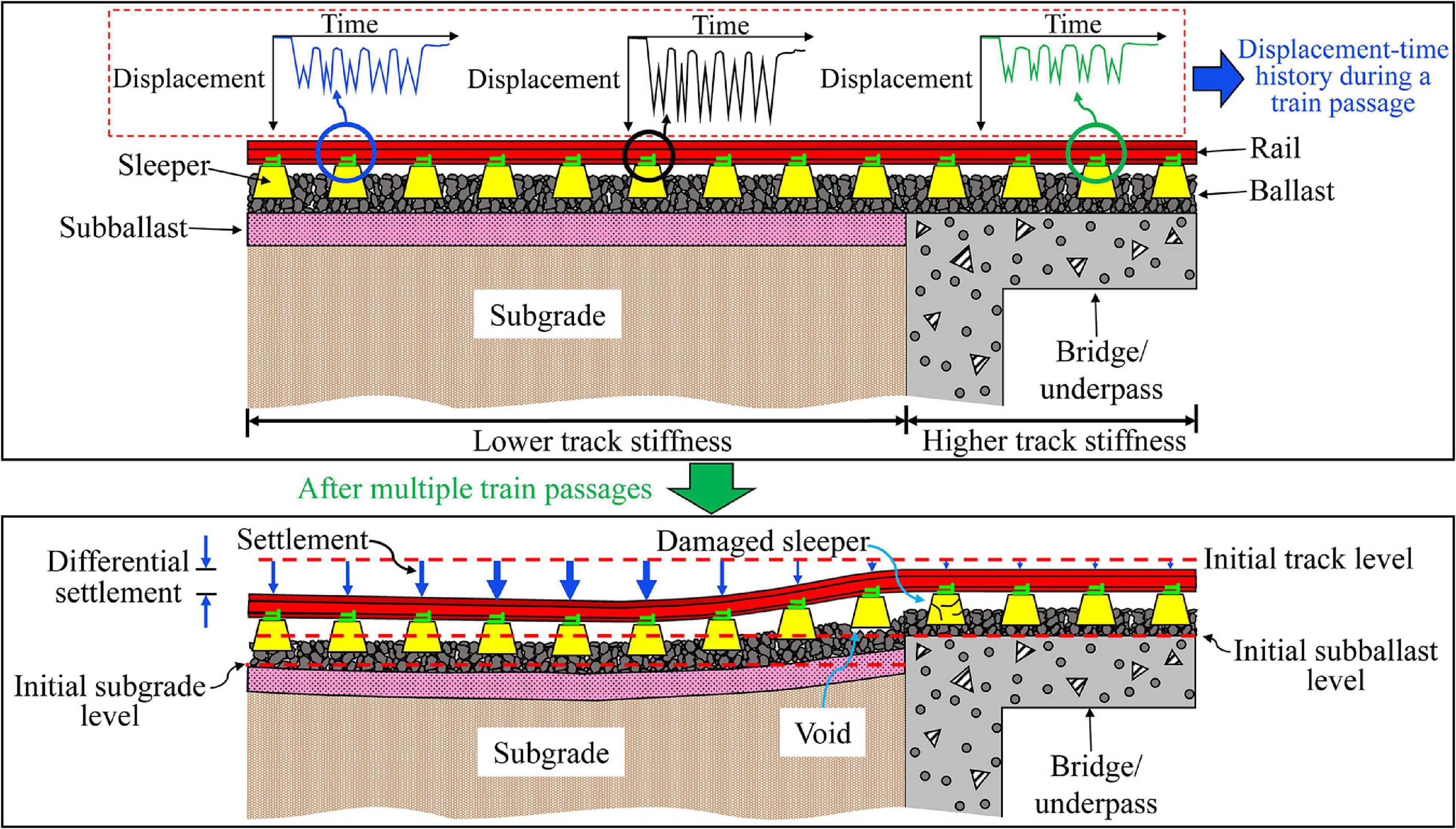
The transition zone between a bridge abutment and an embankment must be designed to control differential settlement and maintain track geometry.
These differences may lead to differential settlement between adjacent sections, resulting in longitudinal irregularities in track geometry.
Engineering solutions should aim to simultaneously control total settlement, differential settlement, and stiffness variation along the transition zone.
Depending on geological conditions and design requirements, possible measures include enhanced ground treatment in transition areas, adjustments to reinforcement configurations, incorporation of reinforcement layers, and appropriate design of gradual stiffness transitions.
The fundamental principle is that the interface between earthworks and engineered structures should not be treated as an isolated design element. Instead, it must form part of a continuous longitudinal design approach in which variations in stiffness and deformation are controlled according to operational requirements.
3. Ensuring Subgrade and Slope Stability Along Railway Alignments
Railway alignments traverse a wide range of terrain, from lowland areas with soft ground to mountainous regions involving deep cuttings and high embankments.
In these environments, geotechnical engineering must address subgrade stability, foundation bearing capacity, and slope stability simultaneously.
For embankments, key considerations include fill material properties, embankment height, natural foundation conditions, drainage capacity, and the potential for deformation under operational loads.
For slopes, governing factors may include geological stratification, degree of weathering, rock joint systems, surface water conditions, and groundwater conditions.
Depending on the instability mechanism, appropriate solutions may combine ground improvement, retaining structures, ground anchors, geosynthetic materials, and drainage systems.
Solution selection must be based on site-specific geological conditions and stability analyses rather than applying a uniform reinforcement configuration along the entire railway alignment.
4. Controlling Deformation Under Operational Loading
High-speed railway subgrades are subjected to repeated loading conditions. Therefore, in addition to static loads from structural components, geotechnical design must consider the effects of train loading and the deformation characteristics of material layers throughout railway operation.
Depending on track structure type, ground conditions, and material behavior, potential issues may include accumulated deformation, displacement of granular materials, deterioration of interlocking between structural components, and uneven settlement.
For ballasted railway tracks, movement of ballast particles and accumulated deformation within the supporting layers may affect track structural stability.
For ballastless track systems, deformation control requirements for the subgrade and underlying structural layers must be evaluated according to the specific performance characteristics of the system.
Geotechnical solutions must therefore be assessed not only in terms of initial bearing capacity but also their ability to maintain the required performance conditions over the long term.
Railway Subgrade Reinforcement Solutions Using Geosynthetic Materials
As modern transportation infrastructure continues to develop, geosynthetic materials are increasingly applied for various functions, including reinforcement, separation, filtration, and drainage.
However, their effectiveness depends not only on individual material properties but also on installation position, soil–material interaction, and integration with other components of the subgrade system.
Geogrids – Reinforcement and Restriction of Material Displacement
Geogrids are grid-like geosynthetic materials designed to provide tensile resistance and interact with soil or granular materials according to their structural configuration.
In suitable applications, geogrids can enhance particle interlocking, restrict lateral displacement, and improve load distribution within granular layers.
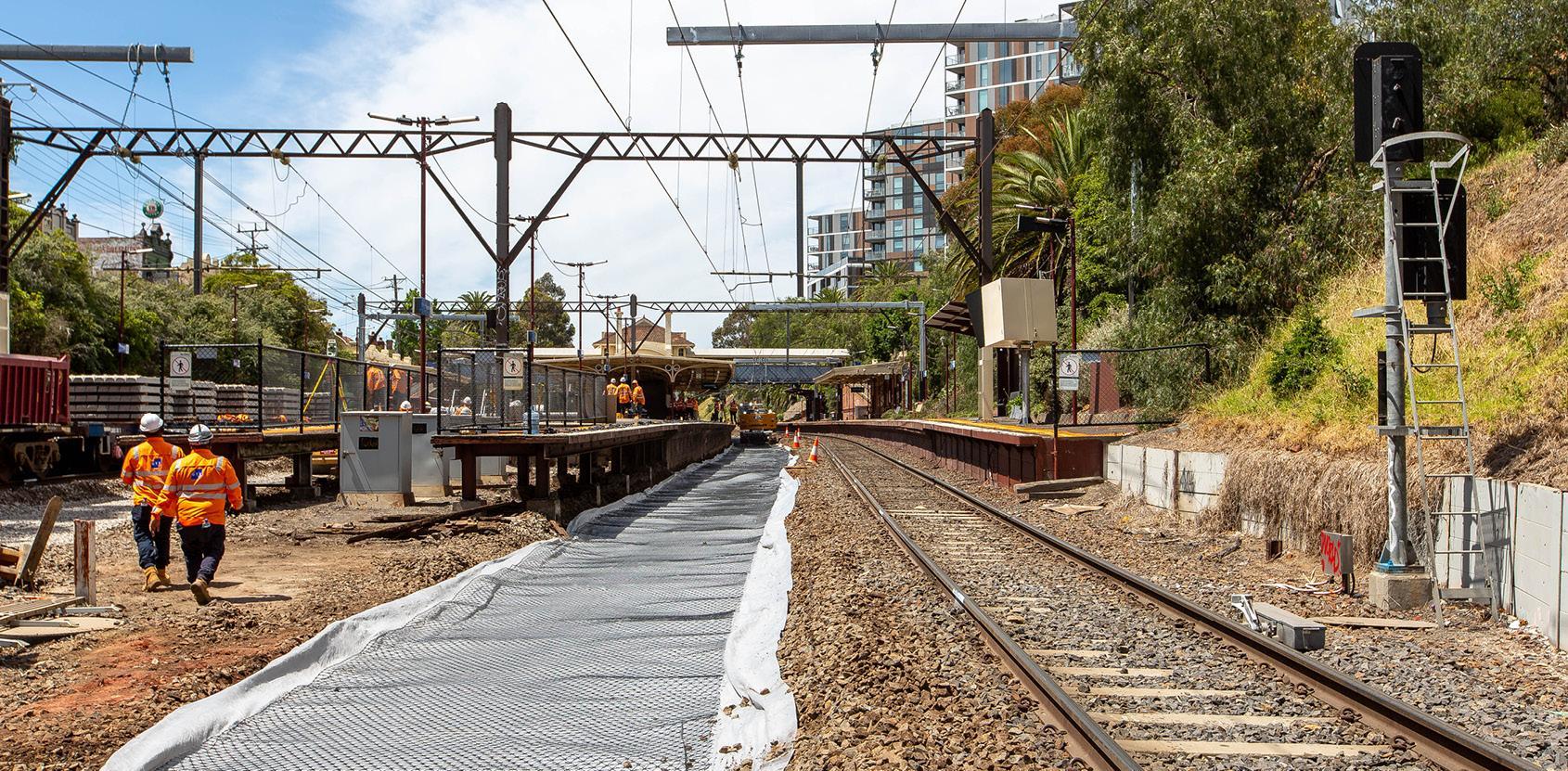
Installation of geogrids to reinforce material layers within railway subgrade structures.
For ballasted railway tracks, geogrids may be installed at appropriate locations to reduce ballast movement and help control accumulated deformation.
Within embankments, geogrids may also form part of ground reinforcement systems or pile-supported embankment structures, depending on the adopted design.
Actual performance depends on tensile strength, material stiffness, aperture size, interaction with granular materials, installation position, and the overall operating conditions of the system.
Therefore, geogrid selection should be based on the specific technical requirements of each application rather than solely on the nominal tensile strength of the product.
Geocells – Enhancing Material Confinement
Geocells are three-dimensional cellular confinement systems that are typically expanded and filled with suitable materials to form a reinforced layer.
Their working mechanism is based on confining infill materials within individual cells, restricting lateral displacement, and mobilizing interaction between the infill and cell walls under applied loads.
Under appropriate conditions, geocell systems can improve the stability of granular layers, enhance load distribution, and reduce embankment deformation.
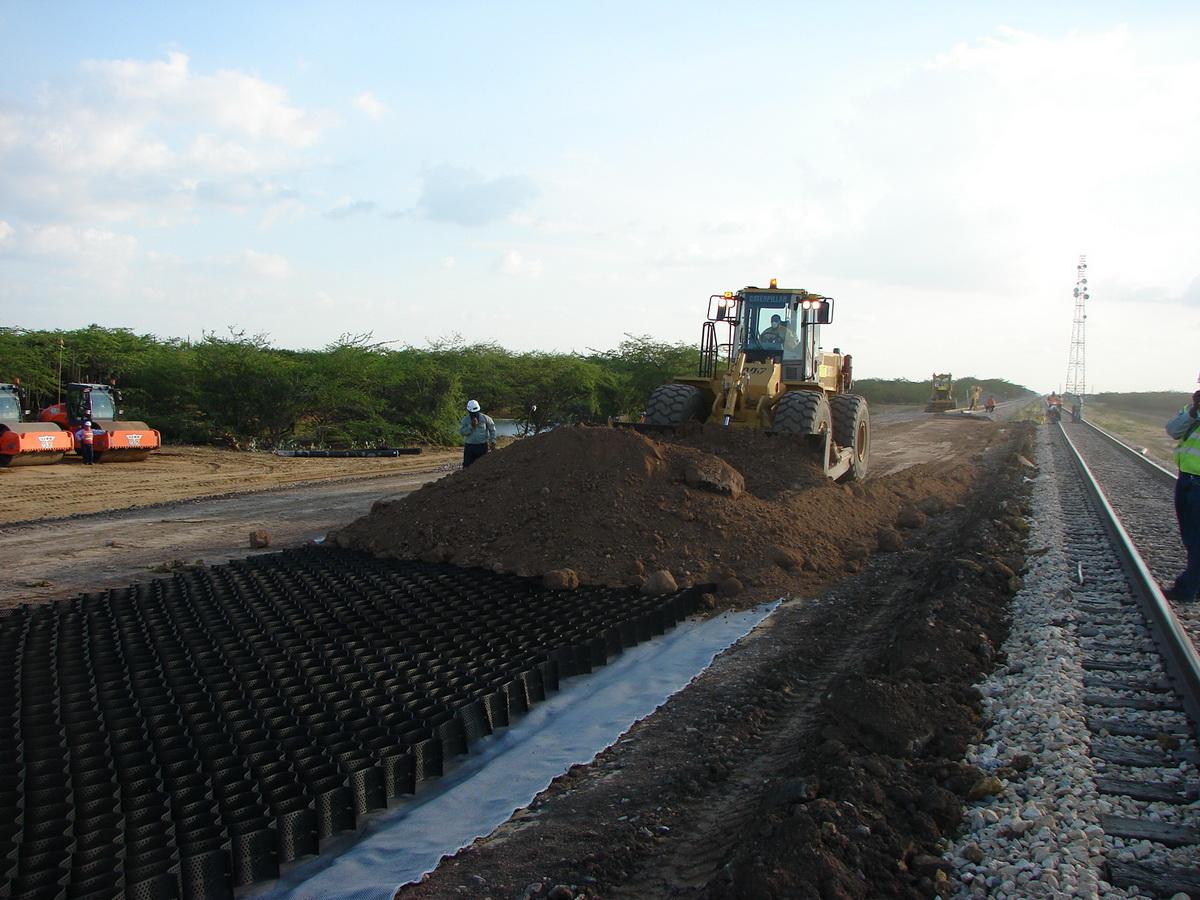
Geocell structure and its application in confining infill materials to improve the stability of foundation layers.
For railway subgrades constructed over soft ground, geocells may be investigated as part of an integrated reinforcement system. Their effectiveness should be evaluated based on embankment height, foundation soil characteristics, infill material type, geocell configuration, and loading conditions.
A study published in 2026 in the KSCE Journal of Civil Engineering investigated a high-speed railway embankment system incorporating geocells and deep cement mixing columns, focusing on settlement control and optimization of reinforcement configurations.
The findings demonstrated the potential of this combined approach while emphasizing the importance of design parameters in determining ground improvement performance.
Geosynthetics – Integrating Multiple Functions Within Subgrade Structures
Geosynthetics comprise a broad category of synthetic geotechnical materials, including geogrids, geotextiles, geomembranes, and geocomposites.
Depending on product type and configuration, these materials can perform one or more functions, such as reinforcement, separation, filtration, and drainage.
Within railway subgrade structures, geosynthetics can help prevent intermixing between material layers, improve drainage conditions, or enhance the load-bearing performance of certain components.
However, not all types of geosynthetics are interchangeable. Each material possesses different mechanical and hydraulic properties and is suited to particular applications.
Material selection must consider the intended design function, soil contact conditions, durability requirements, resistance to installation damage, and design service life.
For high-speed railway projects, geosynthetics should be considered components of an integrated geotechnical solution, working in combination with subgrade materials, reinforcement structures, and drainage systems.
Reinforced Soil Retaining Walls and Reinforced Embankment Systems
Reinforced soil retaining walls combine compacted fill with reinforcement elements to form a structural system capable of providing the required load-bearing capacity and stability.
Such solutions may be considered in areas requiring grade separation, embankment construction, or railway alignment development under restricted site conditions.
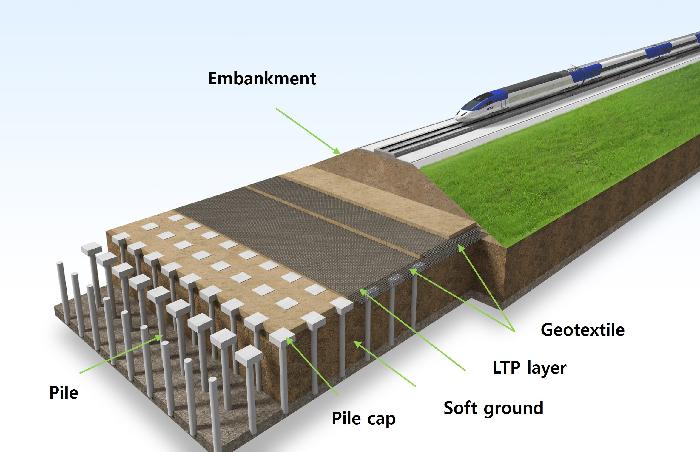
A geosynthetic-reinforced pile-supported embankment system designed to control deformation over soft ground.
Another potential application is the combination of pile-supported embankments with geosynthetic-reinforced load transfer platforms, commonly referred to as Geosynthetic-Reinforced Pile-Supported (GRPS) embankment systems.
In GRPS systems, embankment loads are transferred to the pile system through the combined action of soil arching, the load transfer platform, and the tensile resistance of reinforcement materials.
Load distribution and settlement reduction performance depend on system configuration, material properties, pile spacing, and foundation soil conditions.
These structural systems can provide advantages under suitable project conditions but require detailed engineering analysis to determine bearing capacity, deformation behavior, overall stability, and construction requirements.
From Material Selection to Integrated Solution Design
One of the key requirements of modern geotechnical engineering is a shift from selecting individual materials toward designing integrated solutions based on the working mechanisms of the entire structure.
For example, when improving soft ground, simply adding geogrids does not automatically resolve the consolidation problems associated with highly compressible soil layers. In such cases, the design may need to combine reinforcement with deep ground improvement measures or load-bearing pile systems.
Similarly, at transition zones between embankments and bridge abutments, solutions must be evaluated based on stiffness differences, ground deformation characteristics, and longitudinal settlement control requirements.
In areas with unfavorable drainage conditions, reinforcement material selection must be coordinated with drainage design and water-related risk management.
The solution selection process must therefore consider the following factors simultaneously:
Geological conditions: Soil composition, thickness of geological strata, shear strength, compressibility, and groundwater conditions.
Load-bearing requirements: Design loads, embankment height, stress conditions, and overall system stability.
Deformation requirements: Total settlement, post-construction settlement, differential settlement, and the ability to maintain track geometry.
Material configuration: Mechanical properties, durability, soil–material interaction, and installation conditions.
Construction conditions: Available working space, construction sequence, site accessibility, quality control, and project schedule.
Long-term management: Deformation monitoring, evaluation of ground improvement effectiveness, and maintenance of the required performance conditions throughout the design service life.
Integrating these factors provides the basis for selecting appropriate solutions for each railway section rather than applying a single treatment method across areas with differing geological conditions.
Quality Control and Monitoring – Essential Requirements Throughout the Infrastructure Lifecycle
For high-speed railways, geotechnical quality must be controlled throughout site investigation, design, construction, and post-construction monitoring.
During the investigation stage, accurate identification of geological strata, groundwater conditions, and the physical and mechanical properties of soil provides the foundation for predicting deformation and selecting suitable ground improvement measures.
During construction, quality control must cover material properties, installation configurations, actual ground conditions, and compliance with approved design documentation.
Depending on the selected treatment method, inspection and testing activities may include material testing, compaction verification, load testing or field testing, evaluation of deformation moduli, and verification of relevant acceptance criteria.
For soft ground, settlement and pore water pressure monitoring may be used to track soil consolidation and evaluate ground behavior during construction.
At locations susceptible to differential deformation, monitoring data should be compared against design criteria to assess the effectiveness and suitability of the adopted treatment measures.
Monitoring does not replace engineering design or construction quality control. However, it is an important tool for validating design assumptions, assessing actual ground behavior, and supporting long-term infrastructure management.
Application Directions for Geotechnical Solutions in Vietnam's High-Speed Railway Infrastructure
Vietnam's diverse geological conditions require geotechnical solutions tailored to individual locations, ranging from soft ground in lowland areas to mountainous terrain, deep cuttings, high embankments, and transition zones between earthworks and engineered structures.
For railway sections crossing soft ground, the primary focus is on controlling consolidation, post-construction settlement, and maintaining deformation behavior within design requirements.
At transition zones, managing stiffness variations and differential settlement is essential to maintaining continuity in track geometry.
Meanwhile, in areas involving high embankments or restricted construction space, geosynthetic reinforcement systems, pile-supported embankments, and retaining structures may be considered as technical solutions appropriate to specific site conditions.
The increasing application of geogrids, geocells, and other geosynthetic materials offers additional options for railway subgrade design. However, their effectiveness must be established through engineering calculations, testing, and assessment of actual construction conditions.
The key direction is not to completely replace conventional technologies with new materials, but rather to integrate suitable solutions to meet the load-bearing, stability, and deformation control requirements of each project component.
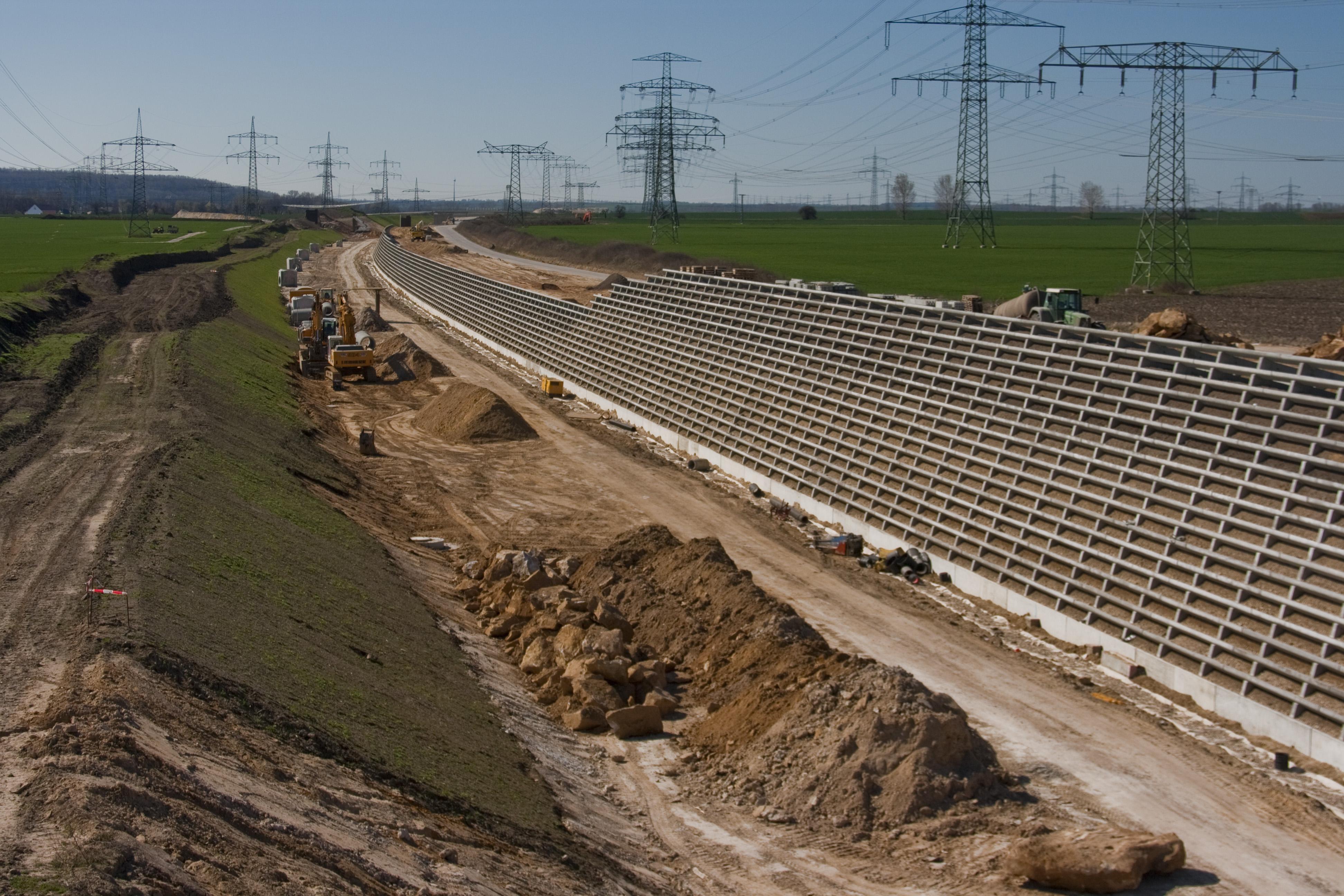
Geotechnical solutions contribute to improving railway subgrade stability and deformation control.
With a strategic focus on developing geotechnical solutions for infrastructure projects, Minh Duc EC, together with its technology partner Strata Geosystems, is exploring the application of geosynthetic materials and integrated reinforcement systems for ground improvement, slope stabilization, and reinforced soil retaining structures.
By integrating material selection, solution configurations, and the technical requirements of individual projects, the objective is to contribute to more effective infrastructure project delivery while addressing increasingly stringent requirements for the quality and sustainability of transportation infrastructure in Vietnam.
Geotechnical engineering is one of the fundamental disciplines underpinning the stable performance of high-speed railway infrastructure. Long-term settlement control, differential settlement mitigation, subgrade stability, and appropriate transition zone design are essential considerations throughout project development.
Materials such as geogrids, geocells, and other geosynthetics offer valuable reinforcement options when applied according to their intended functions and integrated with suitable ground improvement methods.
From a technical perspective, effectiveness does not depend on any single material. Instead, it is determined by accurately identifying geological conditions, selecting appropriate treatment mechanisms, and maintaining quality control in accordance with design requirements throughout the infrastructure lifecycle.
This approach provides a foundation for developing geotechnical solutions suited to Vietnam's specific conditions, meeting the increasingly demanding requirements of modern transportation infrastructure and high-speed railway systems.