
High-Speed Railway: Lessons from South Korea, China, and Implications for Vietnam
As Vietnam studies and develops its high-speed railway system, experiences from nations like South Korea and China offer highly valuable reference points. Beyond technology, the core challenge lies in the approach: building a synchronized system with clear standards designed for long-term operation.
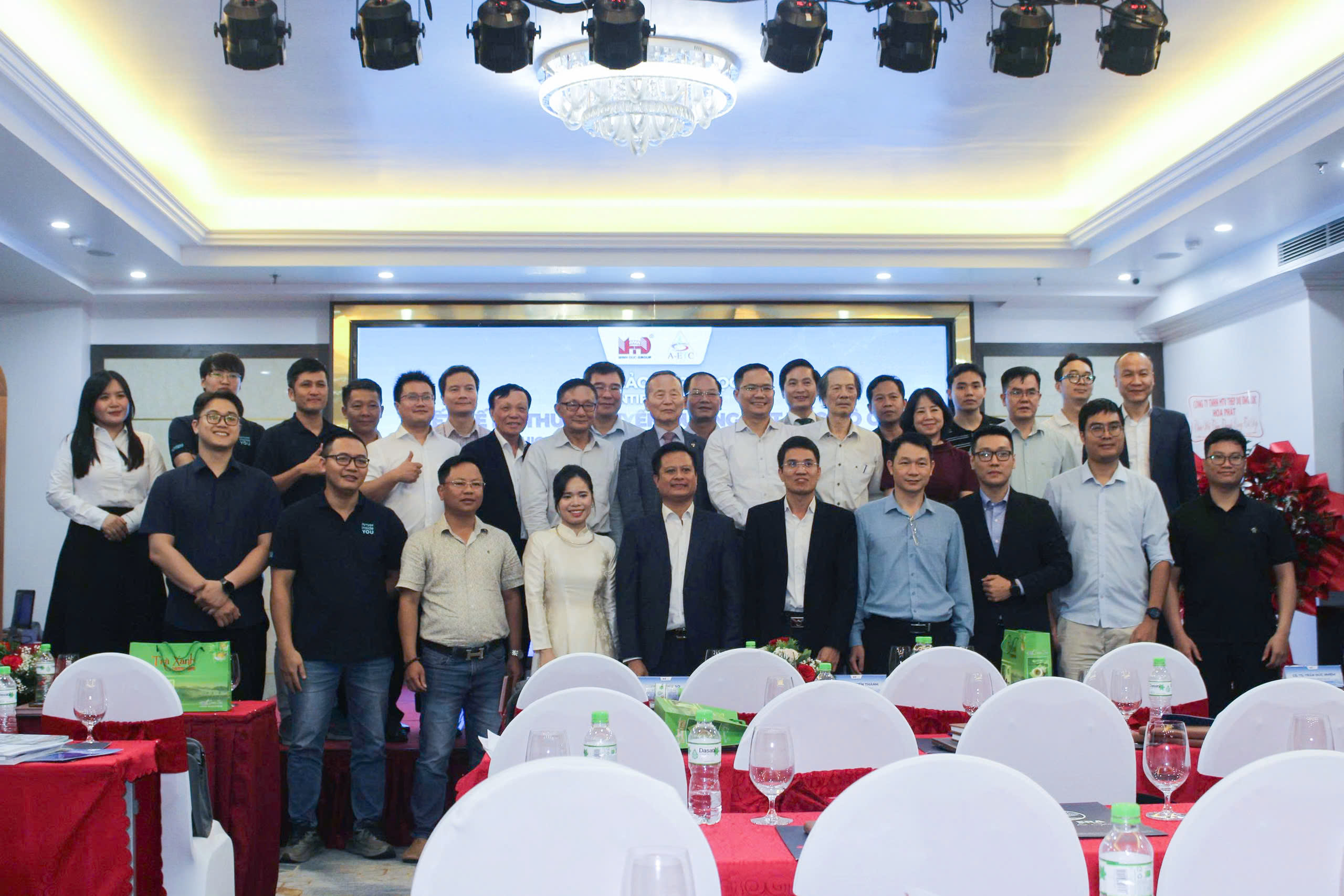 Experts, lecturers, engineers, corporate representatives, delegates, and the Organizing Committee taking a group photo together.
At the scientific seminar "Technical Design of High-Speed Railway Line" held in April 2026, leading domestic and international experts presented a range of in-depth insights. Balancing academic depth with practical experience, the sessions focused on core aspects of high-speed railway system design and construction.
The presentations not only helped systematize the foundational theoretical framework but also suggested specific approaches for project execution under Vietnam's local conditions, drawing particularly on practical lessons from developed nations.
Assessing the professional value of the seminar, Assoc. Prof. Dr. Hoang Ha—Senior Lecturer at the University of Transport and Communications, and former Director General of the Department of Science and Technology, Ministry of Transport—stated that cooperating and exchanging with international partners who share similar conditions with Vietnam is a necessary direction in the current period. According to him, the participation of South Korean expert Mr. Lee Duck Young and Chinese expert Mr. Chen Kai holds vital significance, as both nations have achieved outstanding milestones in high-speed railway development.
South Korea is recognized as an early developer of high-speed railway systems, with its defining hallmark being the ability to master technology through the KTX (Korea Train eXpress) system. Meanwhile, China has emerged as the country with the fastest and most modern high-speed railway network expansion globally in recent decades.
Assoc. Prof. Dr. Hoang Ha remarked: "Directly accessing international experiences through leading experts not only brings practical reference value but also contributes to enhancing the capacity of the domestic scientific and technical team, effectively serving the research and implementation of high-speed railway projects in Vietnam."
Lessons from South Korea: Systemic Thinking and Multi-Disciplinary Integration
One of the most prominent lessons from South Korea is its approach to high-speed railway as a completely integrated system, rather than an isolated infrastructure project.
According to experts, this system does not merely consist of individual items like roadbeds, bridges, tunnels, or stations. Instead, it requires close coordination across multiple components: rolling stock, power supply systems, signaling and telecommunications, operation and maintenance, and notably, national transport planning.
Emphasizing this integration, Dr. Lee Duck Young (High-Speed Railway Expert, Yooshin Engineering Corporation, South Korea) shared: "A high-speed railway system actually operates through the integration of multiple related fields, from infrastructure and vehicles to energy, operations, and planning."
Within this framework, the station acts as the central hub where all technical systems converge and connect. This is also where the requirements for managing "interfaces" between different disciplines become most evident—a deciding factor for the smooth operation of the entire line.
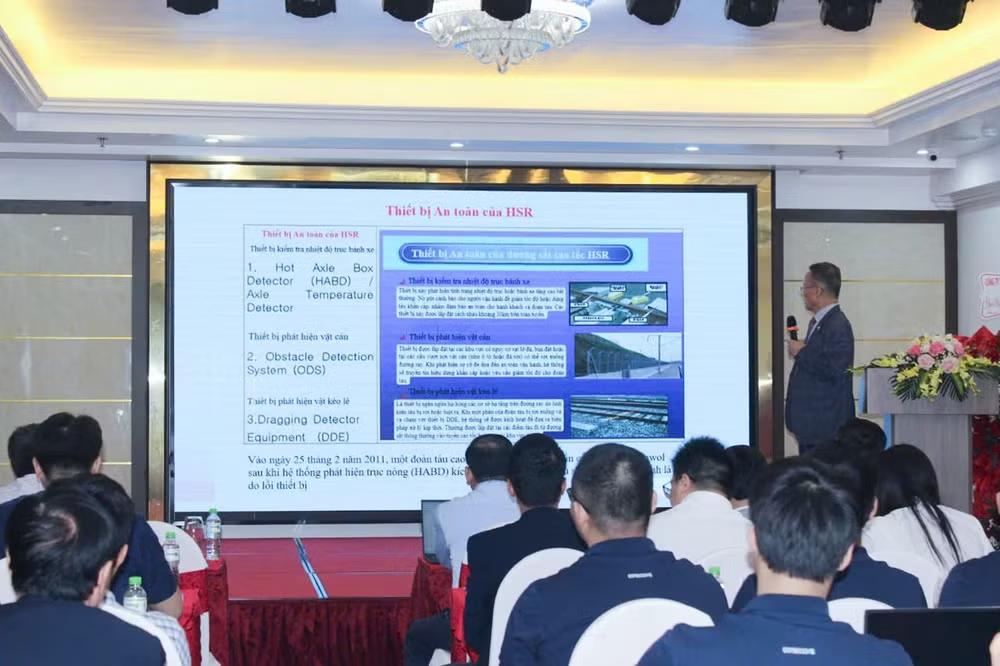
Expert Lee Duck Young presenting the report “Design Principles for High-Speed Railway Lines.”
Another notable point is the development orientation aligned with sustainable transport strategies. South Korea early on identified the role of high-speed railways in shifting transport structures, reducing dependence on roadways, and moving toward low-emission transport models.
In terms of operation, high-speed railway is highly regarded as a high-capacity, safe, and precise mode of transport. Its automated operation system reduces human dependency and minimizes weather impacts, ensuring consistent operational stability.
From a technical standpoint, the vital lesson lies not in individual components, but in the organization of the overall system. When elements from planning and design to operations are seamlessly connected, efficiency is optimized right from the start.
Lessons from China: Standardization and Mastering Engineering Techniques
While South Korea stands out for its systemic thinking, China demonstrates immense capability in standardizing and mastering the entire high-speed railway engineering chain.
First and foremost, China established a comprehensive, synchronized technical standard system applied uniformly from design through to construction. Calculation methods, load classifications, material regulations, and safety factors are all clearly standardized. Concurrently, international standards are referenced and integrated, creating a regulatory framework that is both unified and flexible.
Notably, these works are designed with a long-term vision, boasting a lifespan of up to 100 years, reflecting a highly strategic and sustainable approach.
At the design level, China emphasizes requirements that serve high-speed operations. This means structures must not only ensure load-bearing capacity but also satisfy strict criteria regarding smoothness, stability, rigidity, and the dynamic interaction between the train and the infrastructure.
This approach demands exceptional precision throughout the entire rollout process—from design and construction to quality control.
Highlighting the design principles for high-speed railway bridges, Chinese expert Mr. Chen Kai (from Minh Duc Group) stated: "Bridge design must adopt 'safety first, quality as core' while meeting the specific requirements of high-speed trains, such as high alignment smoothness, high stability, high rigidity, and excellent dynamic response characteristics."
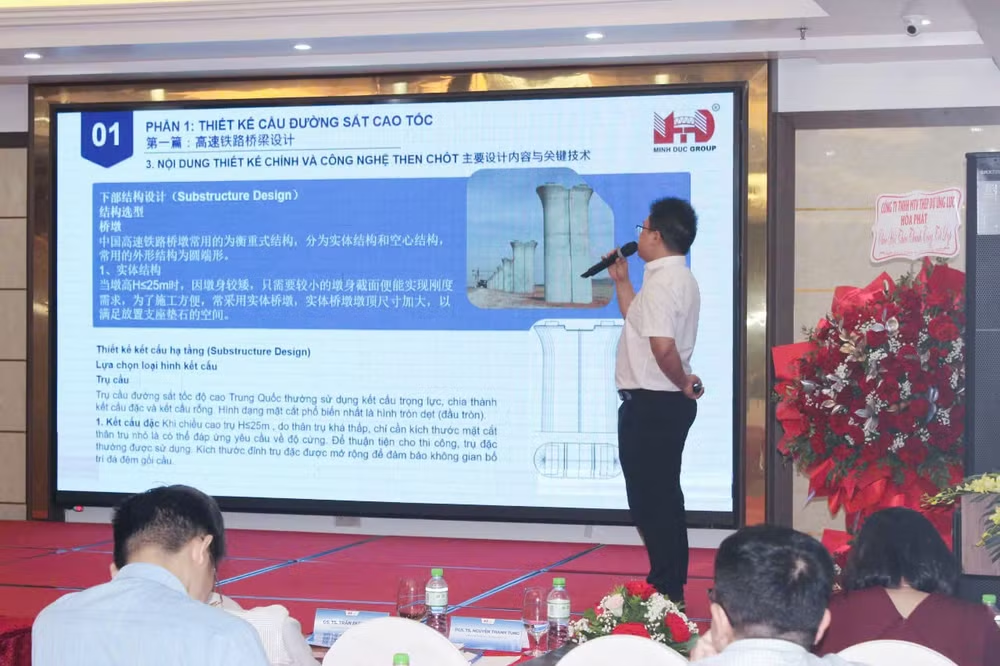
Expert Chen Kai presenting the report “Experiences in the Design and Construction of High-Speed Railway Bridges in China.”
Another crucial factor is the aggressive application of standardization and modularization. Bridge components with standard spans are widely utilized, helping to simplify design, shorten construction timelines, and optimize costs.
Nevertheless, the system maintains flexibility through tailored designs when encountering complex terrains or challenging technical requirements. This is precisely how China balances economic efficiency with strict technical demands.
From the experiences of South Korea and China, it is evident that developing a high-speed railway is not merely an investment challenge, but a process of building a complete technical and operational system.
For Vietnam, choosing the right path must begin with systemic thinking, establishing a synchronized technical standard system, and enhancing organizational execution capacity. Only when these factors are guaranteed can high-speed railways truly fulfill their role as a backbone of modern transport infrastructure, driving long-term socio-economic growth.
According to Nhan Dan Newspaper.