
From International Perspectives to Vietnam's Reality: High-Speed Railway is a Systemic Challenge
At the Scientific Seminar "Technical Design of High-Speed Railway Line" held on April 18, 2026, in Quang Ninh, presentations by domestic and international experts shared a common conclusion: Developing a high-speed railway is not merely about building infrastructure, but is a comprehensive problem of systems, standards, and the capacity to master technology.
International Perspectives: From Systems to Standards
According to Dr. Lee Duck Young (Yooshin Engineering Corporation), high-speed railway is a multi-disciplinary integrated system where infrastructure, rolling stock, power supply, signaling, operations, and urban planning function as a unified whole. In particular, the station plays a central hub role, serving as the convergence and coordination point for all components of the system.
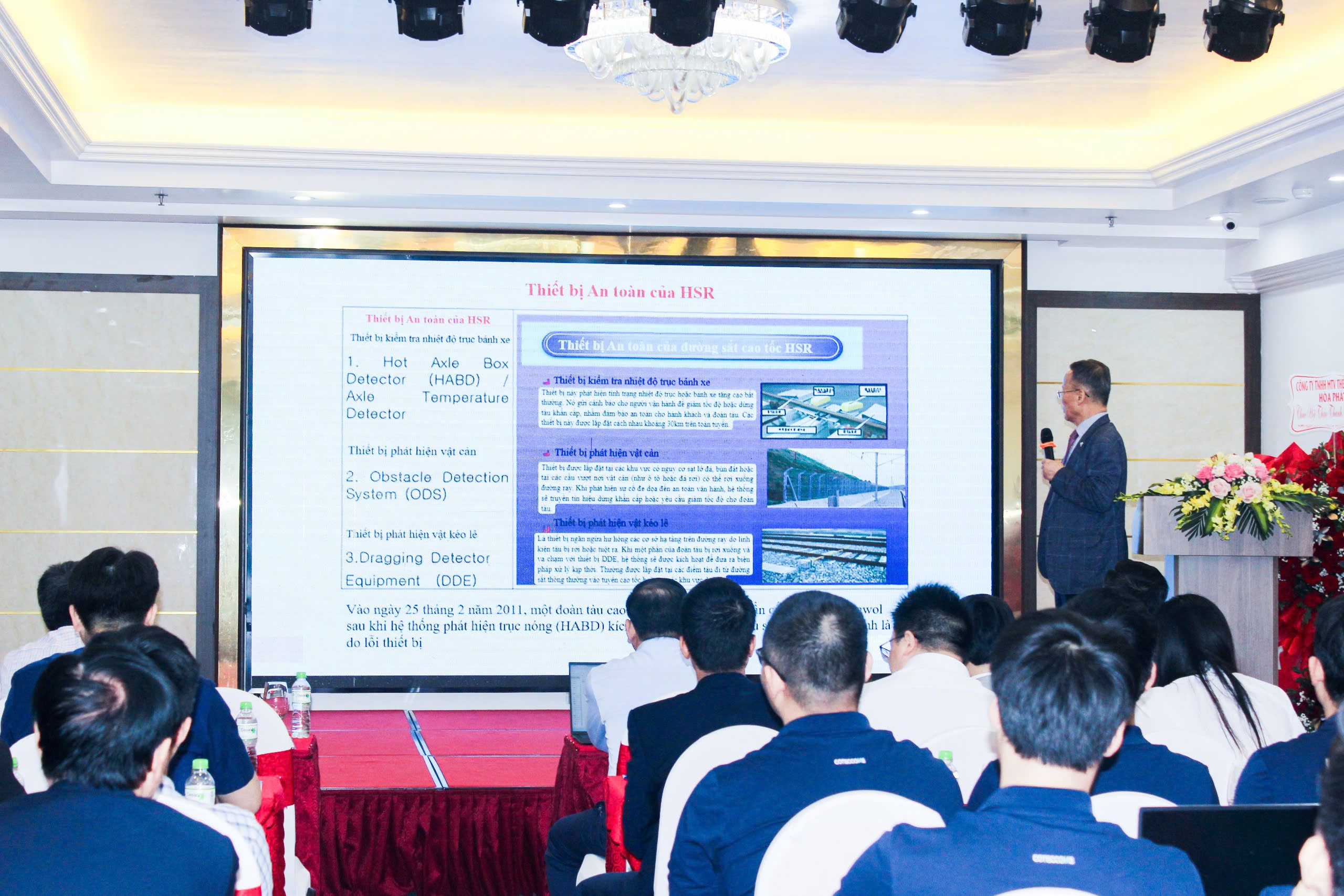
Expert Lee Duck Young presenting the topic “Design Principles for High-Speed Railway Lines” at the seminar.
This approach demonstrates that the efficiency of a high-speed railway line does not lie in individual items but is determined by the synchronization level of the entire system.
From another perspective, experiences from China, through the presentation of expert Chen Kai (Minh Duc Group), emphasized the role of a consistent technical standard system and large-scale implementation capacity. In the design of high-speed railway bridges, the allowable stress method is applied consistently throughout the entire standard system, along with core principles such as safety, rigidity, stability, and the dynamic response capacity of the structure.
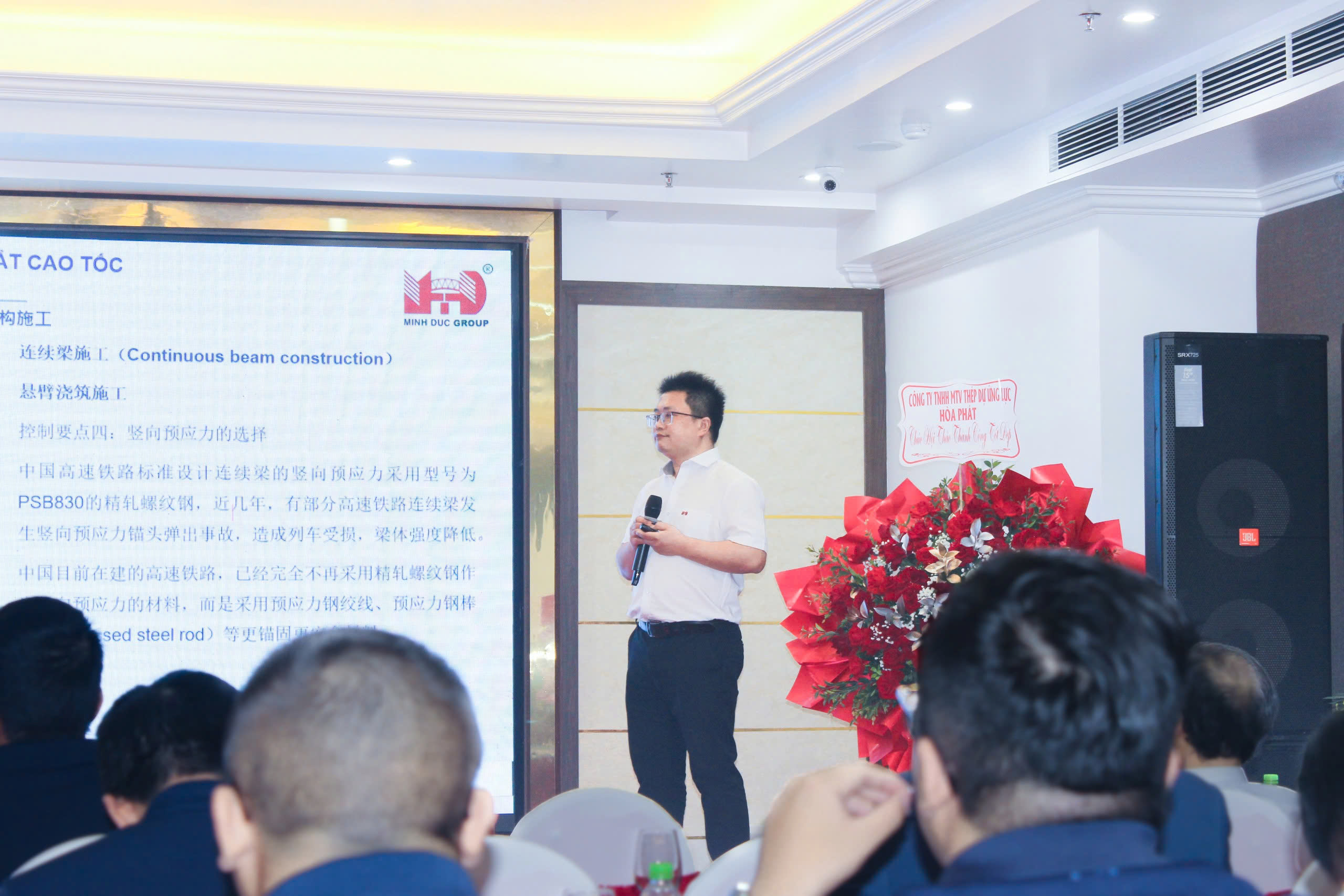
Expert Chen Kai sharing insights on the technical standard system in high-speed railway bridge design.
Notably, standardization and modularization not only help shorten design and construction time but also ensure uniformity and quality control capacity on a large scale—a key factor in high-speed infrastructure development.
Vietnam's Perspective: Technical Problems and Systemic Gaps
From domestic practice, experts also pointed out the intrinsic challenges in implementing high-speed railways.
According to Assoc. Prof. Dr. Hoang Ha (University of Transport and Communications), bridges on high-speed railways can account for 60% to 90% of the total line length. They are also the most technically complex items, as they must simultaneously control heavy loads, dynamic vibrations, and the risk of structural instability under high-speed impacts.
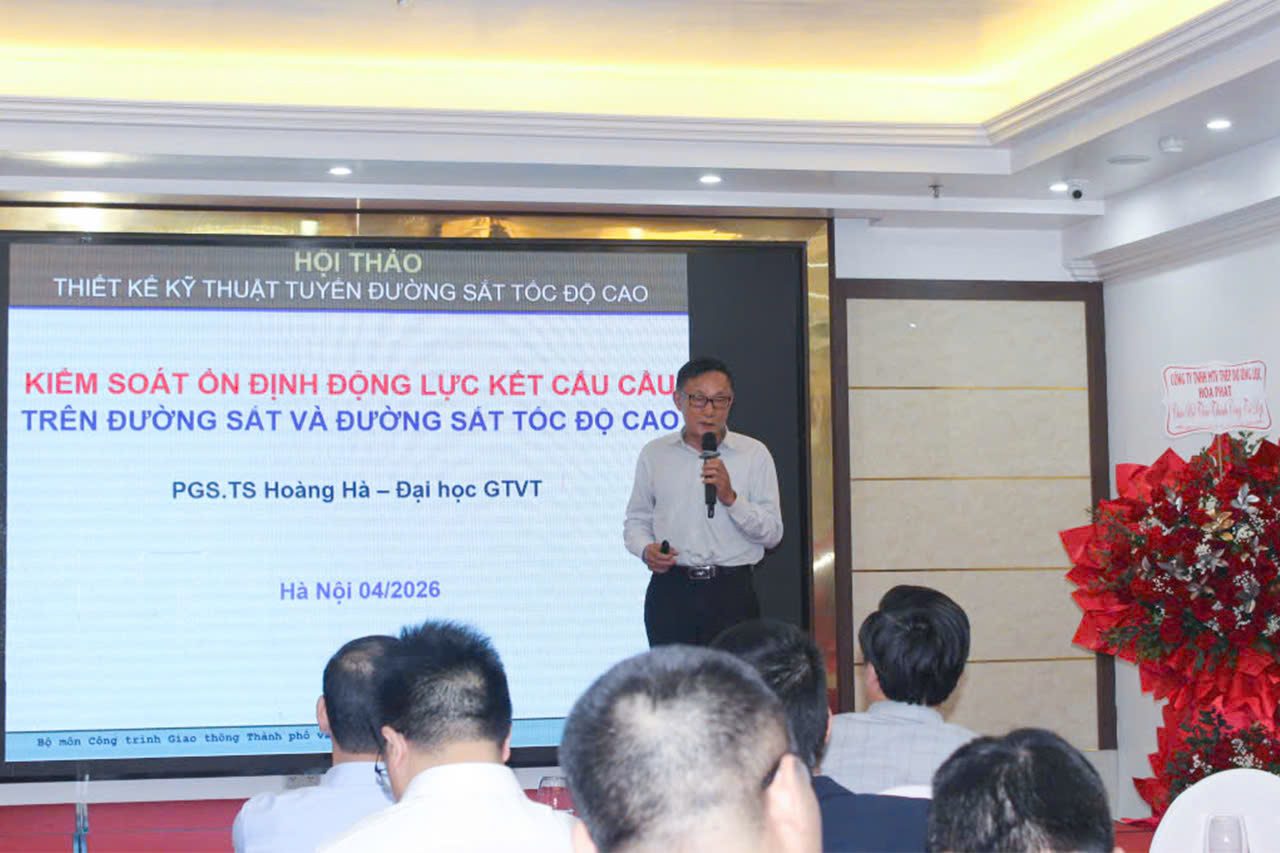
Assoc. Prof. Dr. Hoang Ha (University of Transport and Communications) presenting the report “Dynamic Analysis of High-Speed Railway Bridges.”
Meanwhile, domestic design studies show that the technical requirements for high-speed railway bridges are exceptionally strict, demanding high rigidity in both vertical and horizontal directions, along with rigorous criteria for geometry and structural vibration.
In addition, design proposals in Vietnam have initially approached advanced standards such as European standards (EN), China, and the domestic regulation system, with high requirements for load control, dynamic analysis, rail-structure interaction, and project lifespan.
However, the greatest challenge today does not lie in isolated technical solutions but in the lack of synchronization across the entire value chain—from design, construction to operation, and from technology to implementation capacity.
In this context, specialized seminars co-organized by Minh Duc Group and A-ETC go beyond sharing knowledge; they play a role in connecting international experiences with Vietnam's reality, step-by-step forming the foundation of mindset and standards for future large-scale infrastructure projects.
Gathering experts from South Korea and China alongside the domestic expert team has created a multi-dimensional exchange space, contributing to clarifying core issues and shaping the appropriate approach for Vietnam.