
How has the Seoul - Busan high-speed railway transformed South Korea's economic and urban structure?
According to research by Kwang Sik Kim (2000) published in Cities journal, the Seoul – Busan high-speed railway has contributed to restructuring South Korea’s development landscape, promoting regional connectivity, expanding employment distribution, and creating spillover growth momentum, even as population concentration in the Seoul metropolitan area continues.
This reflects the role of high-speed transport infrastructure in both strengthening the appeal of urban centers and expanding development opportunities for peripheral regions, contributing to reshaping Korea's growth map toward a more connected and distributed model.
From overload pressure to strategic investment decision
Before the implementation of the Seoul - Busan high-speed railway, approximately 70% of South Korea's economic and industrial activities were concentrated along the development corridor stretching from Seoul through Cheonan, Daejeon, and Daegu to Busan.
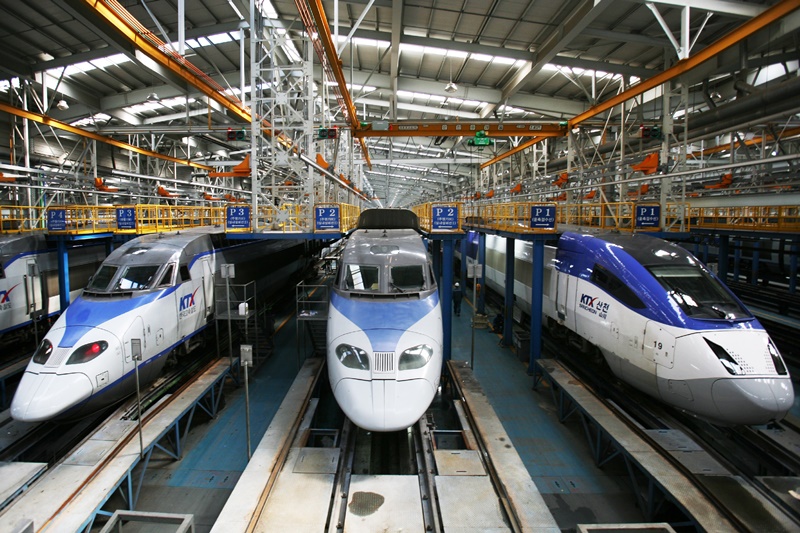
The KTX (Korea Train eXpress) high-speed railway connecting Seoul and Busan – a key infrastructure project launched by South Korea in 1992.
This high level of concentration helped form one of Asia's most dynamic economic zones but also exerted immense pressure on the transport infrastructure system. The increasing demand for freight and passenger travel between major economic hubs pushed roads, traditional railways, and aviation to the brink of overload.
In that context, South Korea chose to invest in the Seoul - Busan high-speed railway as a strategic solution to enhance national transport capacity while creating new development momentum for localities along the route.
Spanning over 400 km, with a maximum operating speed of 300 km/h and the capacity to serve hundreds of thousands of passengers daily, the project is not merely a transport facility but a vital part of the nation's strategy to restructure its development space.
Beyond shortening distances: Expanding development opportunities
Studies conducted after the high-speed rail network became operational show that the most significant impacts were not felt in Seoul or Busan, but in the intermediate cities along the connectivity corridor.
Improved accessibility is expected to facilitate these cities in attracting investment, jobs, and new economic activities. Reduced travel time allows businesses to expand their operational reach, while workers gain more choices regarding where to live and work.
Many international studies also indicate that small and medium-sized cities are often the primary beneficiaries of high-speed rail. Previously disadvantaged by geographical distance and limited connectivity, these localities have seen the gap with major economic centers narrowed, creating a more favorable environment for investment attraction and service development.
Railway stations as drivers of new urban development
One of the most distinct changes in South Korea is the evolving role of high-speed railway stations.
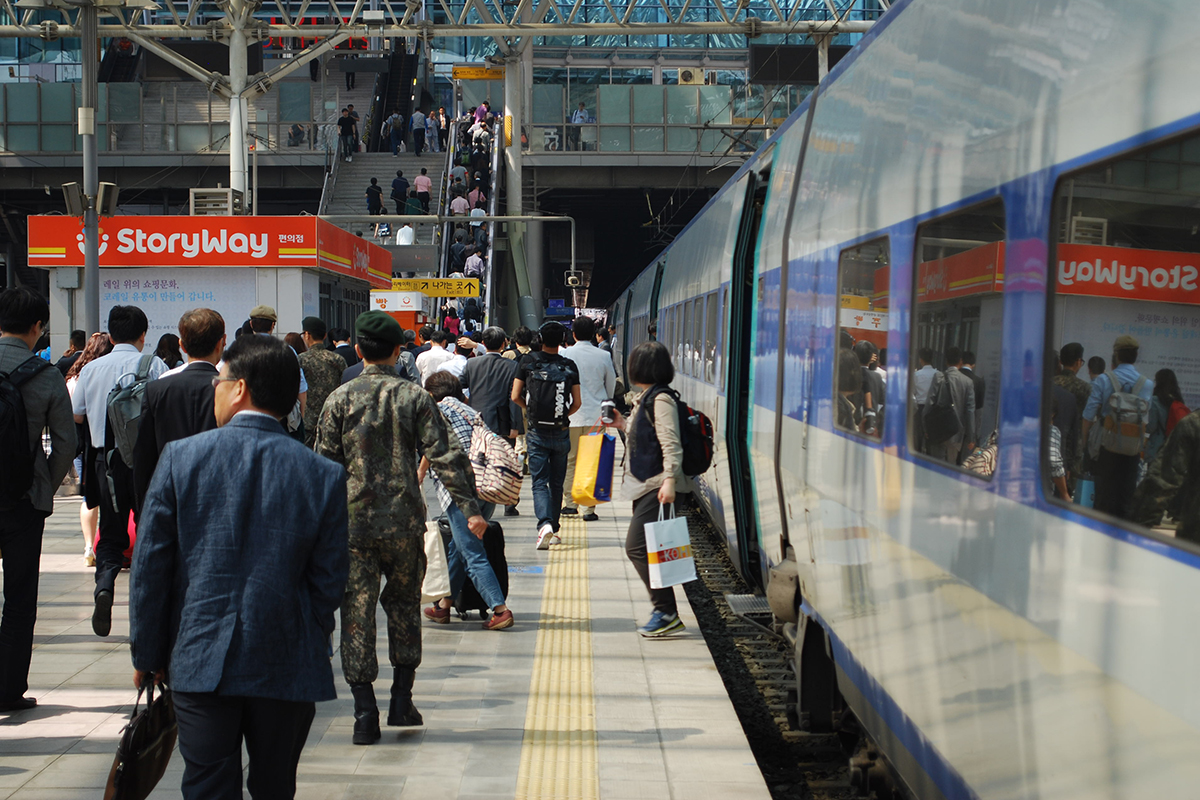
High-speed railway stations are not just passenger transit hubs; they have become new growth poles, attracting investment, commerce, services, and driving urban expansion
From being mere transit points, areas surrounding these stations have gradually transformed into new urban growth poles. International experience from Japan and France shows that high-speed rail stations often become nuclei for attracting commercial activities, services, and new urban development.
This trend mirrors experiences in Japan and France, where high-speed rail hubs served as the foundation for urban reconstruction and local economic development.
This demonstrates that the value of high-speed rail lies not only in the tracks or the trains themselves but in their ability to create new development spaces around key connection points.
Promoting more balanced regional development
One of South Korea's key objectives in investing in high-speed rail was to alleviate excessive concentration in the Seoul capital region.
Although it has not altered Seoul's role as the primary center, high-speed rail has contributed to expanding the economic development space, allowing for a broader distribution of employment and investment. Businesses have more location options, while citizens can more easily access jobs, education, and high-quality services.
Thus, high-speed rail serves as a tool to support regional development, contributing to the redistribution of resources and opportunities across localities.
Lessons for Vietnam
Vietnam is currently preparing to implement the North-South high-speed railway project, one of the largest infrastructure undertakings in the nation's history.
The Korean experience shows that high-speed rail does not automatically create balanced regional development. However, when combined with urban planning, industrial development, and the growth of new centers, this infrastructure can drive the redistribution of employment, expand growth spaces, and enhance national competitiveness.
If planned in synchronization with strategies for urban, industrial, logistics, and service development, the North-South high-speed railway can become a catalyst for new growth poles, strengthening regional integration and elevating the competitiveness of Vietnam's economy for decades to come.